
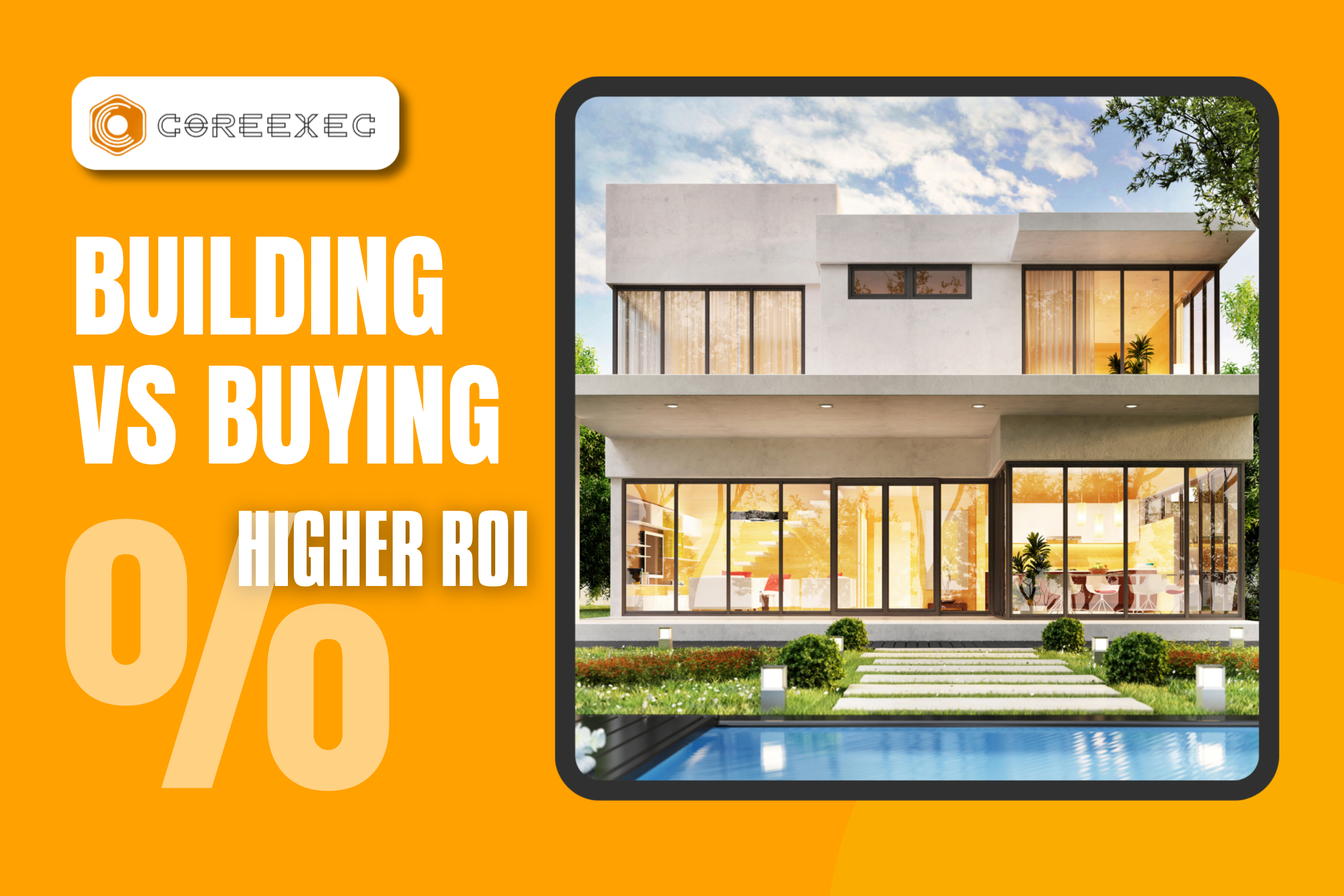
In markets like Miami and South Florida, the question is not simply build vs buy. For investors, it’s a capital allocation decision. Buying locks in existing value. Building creates new value-and captures the developer’s margin.
This guide explains why new construction in Florida can outperform buying, and how to structure projects for resale profit.
Building vs Buying in Florida – The Real Difference
Buying = Paying Retail
When you purchase a finished home, the price already includes:
- Developer profit
- Marketing and transaction costs
- Market appreciation
You enter at full market price with limited upside.
H3: Building = Creating Equity
With new construction, you:
- Acquire land below finished-home value
- Control construction scope and costs
- Deliver a product aligned with current demand
Result: You generate equity during the build phase and monetize it on resale.
Typical Build-for-Resale Economics (Florida)
Baseline scenario (single-family home):
- Land: $80,000 – $150,000
- Construction: $250,000 – $400,000
- Total investment: $350,000 – $500,000
Market resale:
- $500,000 – $700,000+
Target margin:
- $100,000 – $200,000+ per project
This spread is the core of the developer model in Florida growth markets.
Why New Construction Sells at a Premium
Move-In Ready Demand
Buyers consistently pay more for homes that require zero renovation.
Modern Product-Market Fit
Open layouts, energy efficiency, and contemporary finishes align with current buyer expectations.
Lower Buyer Risk
New systems, updated code compliance, and warranties reduce perceived risk—supporting higher pricing.
Why Miami and South Florida Favor Builders
The Miami metro area remains structurally favorable for development due to:
- Continued population inflow
- Strong demand for single-family housing
- Limited inventory of modern homes in key submarkets
This creates a consistent gap:
Demand for new construction often exceeds supply.
For builders, that translates into faster sales and stronger margins.
Control the Product – Control the Exit Price
Buying limits you to existing inventory.
Building allows you to optimize:
- Location (emerging vs. saturated neighborhoods)
- Square footage and layout
- Finish level relative to target buyer
Outcome: You directly influence resale value instead of accepting it.
Scaling a Development Model
Buying is transactional. Building is operational.
With construction:
- Multiple projects can run in parallel
- Contractor pricing improves with volume
- Designs and processes can be standardized
Result: a repeatable, scalable revenue model—not one-off deals.
Where Developers Actually Make Money
The margin is created through:
- Strategic land acquisition
- Cost-controlled construction
- Market-aligned design
- Correct exit timing
You’re not just building a house-you’re engineering a margin.
Risks and How to Mitigate Them
Building carries execution risk. Common issues:
- Budget overruns
- Timeline delays
- Overbuilding for the area
- Poor contractor coordination
Mitigation requires:
- Accurate pre-construction budgeting
- Professional project management
- Market-driven specifications
Working with an experienced construction management company or construction manager company is critical to maintaining margins.
Choosing the Right Team in Miami
Execution quality directly impacts profitability. When selecting a partner, prioritize:
- Proven experience as a general contractor Miami Florida
- Transparent budgeting and scheduling
- Strong subcontractor network
- Local permitting expertise
Leading general contractors in Miami FL and established construction management companies can significantly reduce risk and improve timeline predictability.
If you are comparing options, review multiple miami general contractors and validate their completed projects before committing.
Strategic Conclusion
- Buying = speed and simplicity
- Building = higher complexity, but materially higher upside
For investors:
Buying is consumption. Building is capital creation.
Work With a Professional Construction Management Team
If your objective is to build and resell for profit, precision matters:
- Cost modeling
- Timeline planning
- Market positioning
- ROI forecasting
👉 CoreExec works with investors and developers across Florida to:
- Structure profitable build strategies
- Calculate realistic budgets and margins
- Define clear construction timelines
- Coordinate with general contractors miami and vetted construction management co partners
Start with a project analysis https://coreexec.com/contact-us//
FAQ – Building vs Buying in Florida
Q1. Is building always more profitable than buying?
No. Profit depends on location, cost control, and execution. Without proper planning, margins can disappear.
Q2. How long does it take to build a home in Florida?
Typically 9–15 months, depending on permitting, design complexity, and contractor efficiency.
Q3. What is the biggest risk in new construction?
Budget overruns and delays. Both directly reduce or eliminate profit.
Q4. Do I need a general contractor in Miami?
Yes. Working with experienced general contractors miami or a qualified miami florida general contractor is essential for compliance, scheduling, and cost control.
If you want a precise breakdown for your budget, target city, and expected ROI-run a project analysis with CoreExec before committing capital.